Why do construction projects get delayed (and where it starts)
Most construction delays don't happen suddenly. They begin with small issues — planning delays, supplier changes, or coordination gaps — that go unnoticed early and compound over time.
- Delays usually start weeks before they are visible
- Small disruptions cascade into major issues
- Missing early signals leads to cost overruns
- Grid connections are now as significant as planning itself
The timeline below shows how this actually unfolds.
Why projects get delayed in the UK
Planning delays are only the beginning
Grid connections, water constraints, objections, and supply chain pressure quietly reshape projects long before problems appear on site

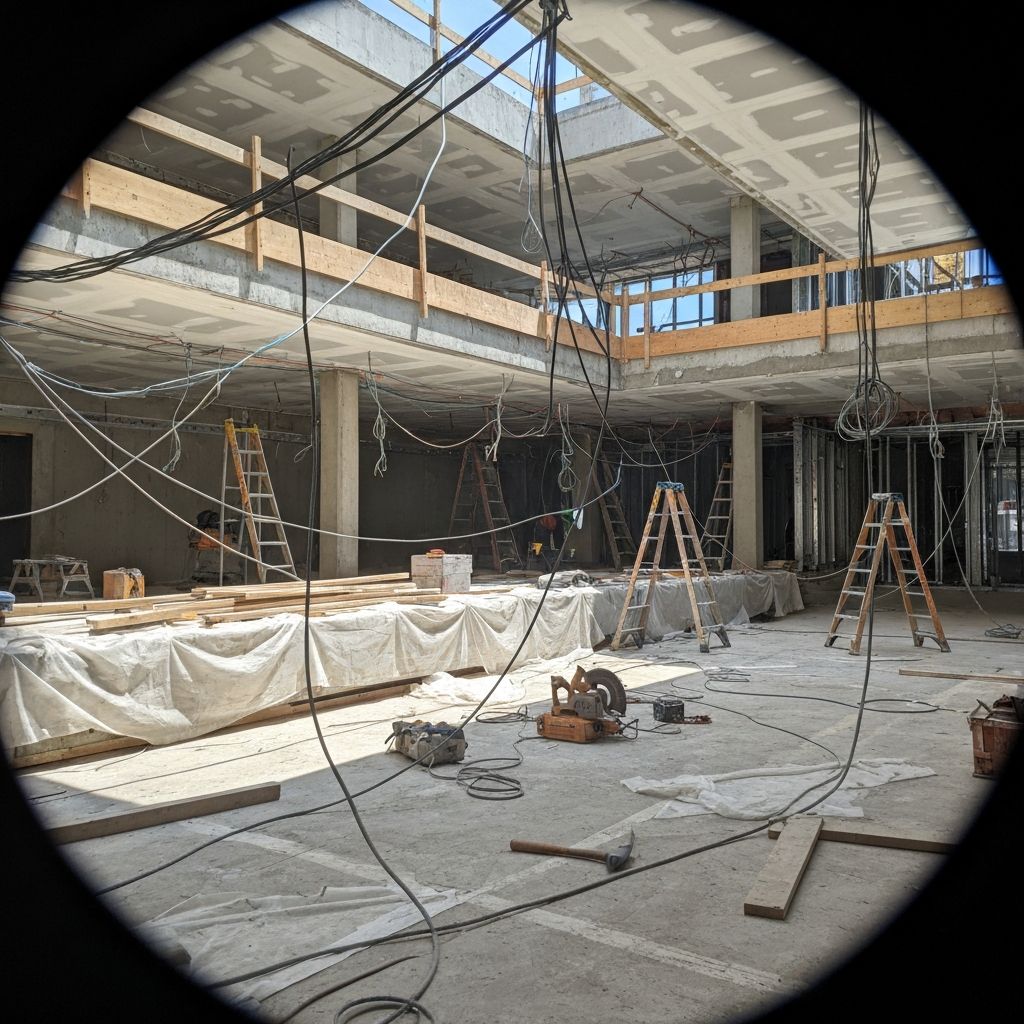
Delays don't happen at once
They build quietly
What causes planning delays in the UK?
Planning delays in the UK are commonly caused by:
- Under-resourced local planning authorities
- Extended consultations and objections
- Section 106 negotiations and legal agreements
- Environmental and regulatory constraints
In theory, major applications should be decided within 13 weeks.
In practice, many projects experience delays of months or even years.
Across the UK, planning backlogs and policy requirements are contributing to mounting delays and rising costs for developers.
It's no longer just planning
Even after planning approval, projects are increasingly delayed by:
- Electricity grid connection backlogs
- Water and wastewater infrastructure limits
- Labour shortages and contractor availability
- Material and supply chain disruption
Grid connection delays are now considered as significant a risk to delivery as planning permission itself.
Some projects are waiting years just to connect to the grid, even after approval and funding are in place.
Where projects start to drift
Projects rarely fail at a single point.
They drift — as delays, dependencies, and decisions compound.
The chain reaction
Delays propagate through the system.
A single disruption can cascade across multiple stages of delivery.
What's about to delay your project
Based on live signals, here's how projects typically shift
Project starts
Planning uncertainty
Early coordination pressure begins
Contractor rescheduling
Cost increases begin to emerge
Infrastructure constraints
Grid / water issues surface, design compromises required
By the time delays are visible on site,
they've already been building for weeks.
See it before it hits
RippleXn connects fragmented signals — planning, infrastructure, supply chains — into a single timeline.
Where delays are starting
Early signals across planning, utilities, and coordination
What will be affected next
Dependencies and downstream impacts mapped in time
How your project will change
Realistic timeline adjustments before they compound
Frequently asked questions
Have a similar situation?
Submit your case
Send us your situation. We'll reconstruct the timeline and show you what becomes visible.
Describe your situation
Tell us what happened, what's at risk, and upload any documents you have.
We respond within 24-48h
Our team reviews your case and shows you what a timeline reconstruction reveals.
Or email directly: Bazil.cromer@ripplexn.com